The post Can you trust TripAdvisor reviews? appeared first on Stay In Britain.
]]> When trying to find a hotel or other form of accommodation, it pays to do your research first. Let’s face it, we’re much more likely to visit a particular hotel over another if one our close friends or relatives make a recommendation. But what if you don’t know anyone who has stayed at the hotel you’re thinking of staying at? The TripAdvisor website is probably the first place you will turn to for advice. advice
The meteoric rise of the TripAdvisor brand has been remarkable and the statistics speak for themselves. Founded in 2000, TripAdvisor now boasts over 570 million reviews. It features over 7 million hotels and other tourist attractions around the world. As of July 2017, there were over 450 million unique visitors every month (Source: TripAdvisor Press Centre).
Yet with this growth there has been much controversy. Firstly, any person can leave a negative review about a hotel without any shred of evidence. According to TripAdvisor, reviews come from “trusted members of the travel community” and yet no checks are made on the identity of the people who leave the reviews. An anonymous username and email address is all you need to add a review. What’s more, no proof that you actually stayed at the hotel is needed to leave a review!
Consequently, when a hotel receives a negative review from a guest (they are alerted whenever someone leaves a review), they can simply add a number of positive reviews to push the negative review down the page and out of sight. Given TripAdvisor’s average rating visuals, the more positive reviews added can also trick the system into displaying a higher average score than is really deserved.
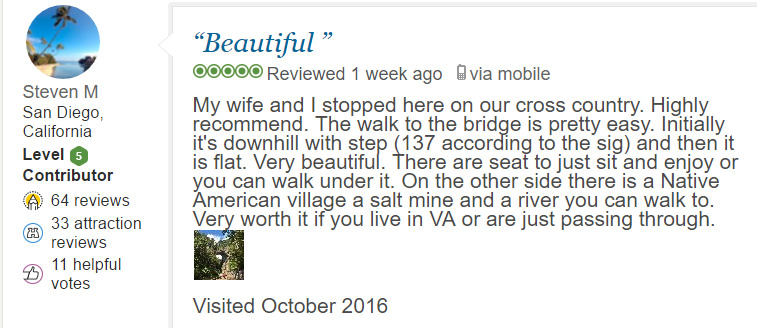
This has led to some less scrupulous hotel owners actively attacking their direct competitors with a flurry of negative reviews under a string of different aliases. Clearly, the intention here is to discredit the competition and to make their own hotel seem more attractive my posting a large volume of positive reviews. Other hotels bribe guests who leave positive reviews with discounts on future stays, free bottles of wine or other such gifts.
To combat this, TripAdvisor proudly asserts that reviews are not posted to the website instantly, but are subject to a verification process which considers the IP address and the email address of the author. The system also tries to detect any suspicious patterns and any obscene language. The website also allows the ‘community’ of users to report suspicious content, which is then assessed by a team of quality assurance specialists. The checks are clearly not working however!
So the next time you’re checking TripAdvisor before booking an overnight stay, we strongly suggest that you follow the recommendations below. TripAdvisor remains a great service but only if you can quickly weed out the fake reviews!
How to to sift through the bogus and fake reviews:
- Discount Single Reviews: Be suspicious of reviews from people who have only left one review, especially ones that have been left some time ago but have never been followed up with reviews of another property. In this way, you can quickly discount both positive and negative reviews which could be disingenuous.
- The More The Merrier: As a general rule, the more reviews someone has left, the more they can be trusted. Look for unusual patterns though. Someone who left a flurry of reviews over a short period and then never returned to add more might not be a genuine contributor.
- The Superhero Test: Someone who has stayed at 51 properties in 20 different countries over a 10 day period is clearly deluded. Either that or they are are Superman!
- Poor Grammar: Although TripAdvisor has ‘auto translate’ software embedded within its site, some hotel groups employ teams of people in overseas locations to leave a constant stream of positive reviews with cloaked IP addresses to get past TripAdvisor’s basic quality checks.
- The Camera Never Lies: Look for posts where people have added photos of the hotel. In most cases, these will be left by genuine travelers who have actually stayed at the hotel. Be aware that some people use damaging photos as a tool to get refunds. To check for abuse, see if that person has left positive as well as negative reviews. If they are using TripAdvisor only to post negative reviews, this could flag an ulterior motive.
- Make Contact: TripAdvisor allows you to make contact with other users. If you see a review which is particularly worrying, test its accuracy by sending that user an email. If you get a response, it is likely that this person is a genuine traveller. If you don’t get a response and that person hasn’t been active on TripAdvisor for some time, it would be fair to say that the review could be a fake.
- Accreditations: Don’t just rely on TripAdvisor! Hotels in Europe many have to pass rigorous checks to gain and retain their star ratings. In the UK, look for accreditation from organisations like ‘The AA’ and ‘Visit Britain’.
The post Can you trust TripAdvisor reviews? appeared first on Stay In Britain.
]]>